
Connectors & Adapters
SC, LC, FC and MPO connectors and adapters with precise alignment for low-loss mating.
In short
What do fiber connectors and adapters do?
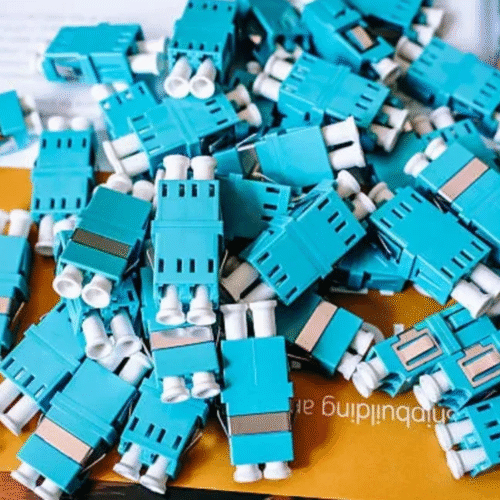
A fiber connector terminates a fiber so it can be plugged in and unplugged; an adapter, also called a coupler, holds two connectors in precise alignment so light passes from one fiber to the next. Connector type, polish and alignment quality decide how much light is lost at every connection in the network.
Where it’s used
- Adapter plates in ODFs and patch panels
- FTTH termination boxes and cabinets
- Field termination of drop cables
- Data room and equipment connections
Buying advice
How to choose connectors.
- 01
Match the connector to the equipment
LC is the norm on active equipment and high-density panels; SC remains common in FTTH. Use hybrid adapters where the two meet rather than adding extra patch cords.
- 02
Use ceramic sleeves for single-mode
Zirconia sleeves hold alignment tightly and keep loss low. Phosphor bronze sleeves are sometimes used for multimode, where tolerances are looser.
- 03
Inspect before you connect
Dirt on a connector end-face can cost more loss than a splice. Inspect and clean every connector before mating it.
Related services
What is the difference between SC and LC connectors?
SC connectors use a 2.5 mm ferrule in a square push-pull body; LC connectors use a 1.25 mm ferrule with a latch and take about half the space. LC is used where port density matters, and SC is widespread in FTTH.
What do fiber adapter colours mean?
Green is single-mode APC, blue is single-mode UPC, and aqua is laser-optimised multimode (OM3 or OM4). Beige usually marks older OM1 or OM2 multimode.
Request a free consultation
Specifying a project?
Tell us about the route, the site or the system. Our engineers will come back with a clear scope and an honest price.