
Optical Distribution Frames
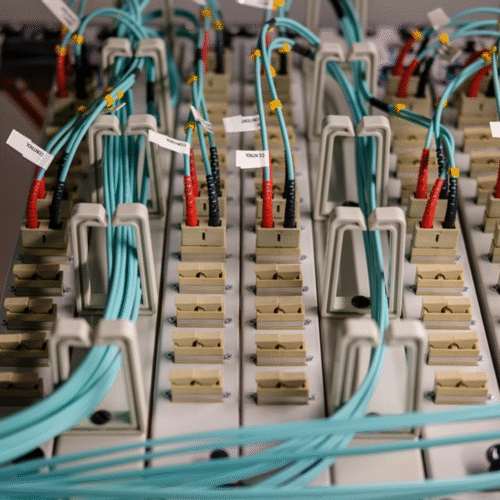
Rack and wall-mount ODFs that terminate incoming cables and keep high-density patching organised.
In short
What is an optical distribution frame (ODF)?
An optical distribution frame (ODF) is where incoming fiber cables are terminated inside a building or exchange. Each cable fiber is spliced to a pigtail inside the frame, and the pigtail’s connector is presented on an adapter panel, so equipment can be connected and rearranged with patch cords without touching the splices.
Where it’s used
- Terminating outside plant cables in exchanges
- Building entry and main distribution rooms
- Data room interconnects
- Headends for residential and commercial developments
Buying advice
How to choose an ODF.
- 01
Keep splicing and patching apart
Good ODFs keep splice trays and the patch field in separate zones, so day-to-day patching never disturbs a splice.
- 02
Balance density against handling
High-density panels save rack space but are harder to work on. Weigh density against how often ports will be changed.
- 03
Label from day one
Agree a labelling scheme for frames, panels and ports that matches the network records, and apply it as the ODF is installed.
What is the difference between an ODF and a fiber patch panel?
A patch panel presents connectors for patching. An ODF combines that patch field with cable entry, strain relief, splice trays and slack storage, so it can terminate an incoming cable as well as patch it.
Should I choose a rack-mount or wall-mount ODF?
Rack-mount ODFs suit exchanges, data rooms and any room with a cabinet. Wall-mount ODFs suit smaller buildings and rooms without racks, where only a few dozen fibers terminate.
Request a free consultation
Specifying a project?
Tell us about the route, the site or the system. Our engineers will come back with a clear scope and an honest price.